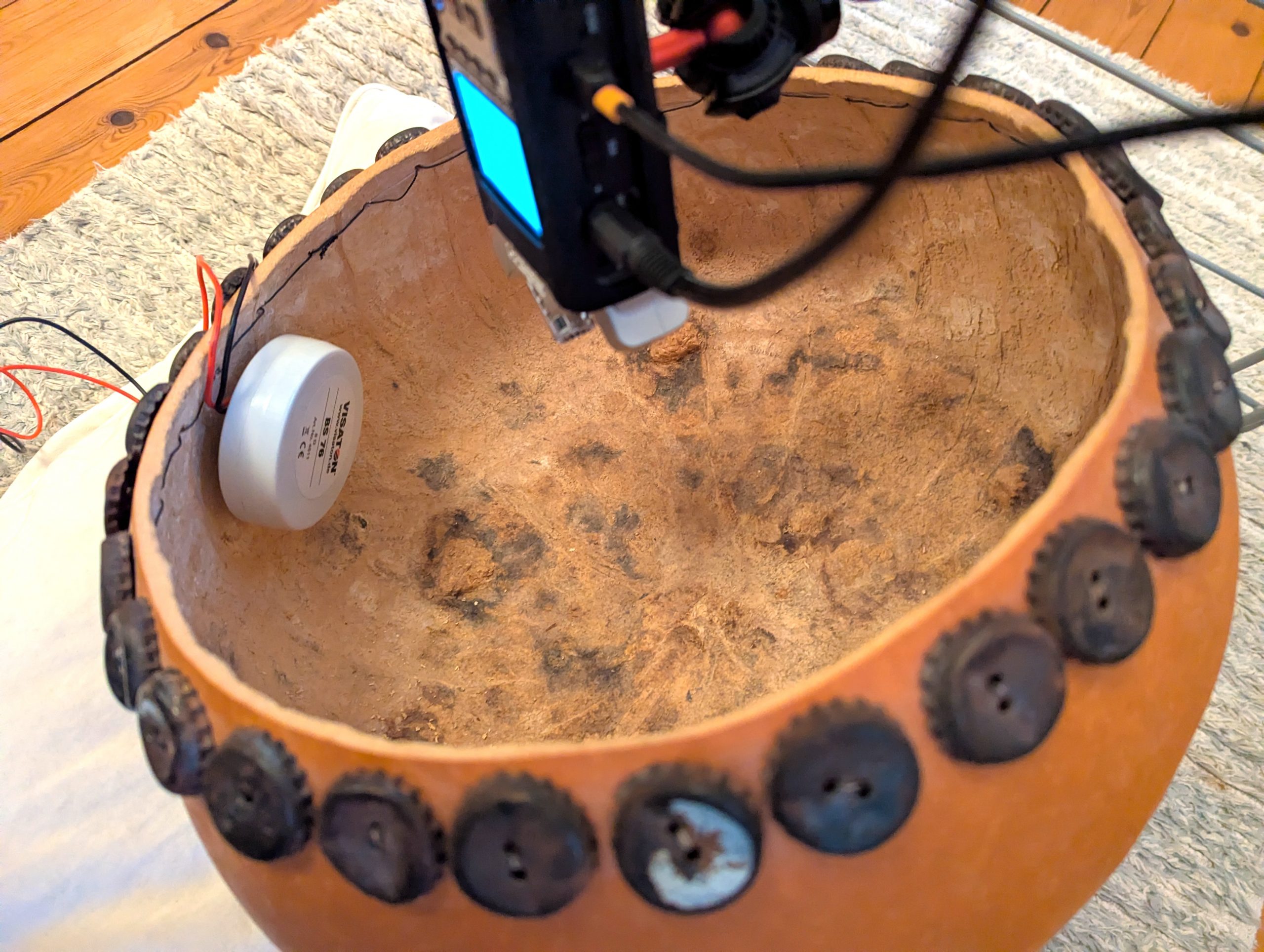
As mentioned before, it’s not always easy to record the buzzing of mbiras and calabashes in a way that doesn’t dominate the mic’s sound.
When recording Sekuru Chawasarira’s album, Samora spent considerable time and effort sound-designing the buzzing. For the Rushinga recordings however, time was very tight, and he decided simply to remove the buzzers from the mateze altogether.
Unfortunately, without buzzing, the mbira sounds rather “naked”. An essential component is missing. Therefore, I started to wonder whether one could add it after the fact.
My first idea was to try mounting a speaker inside a deze. I asked friends for components, and the fabulous Ecki Güther suggested using a transducer instead, went straight away down to his basement, and came back with everything I needed.
Here’s a video of my first attempts:
Obviously, the recorded result contains the dry signal again. In our case it had been recorded already in a gourd and carefully EQ-ed at this point in the mixing process.
To retain only the actually buzzing components, I removed the tonal elements in SpectraLayers, keeping only transients and noise:
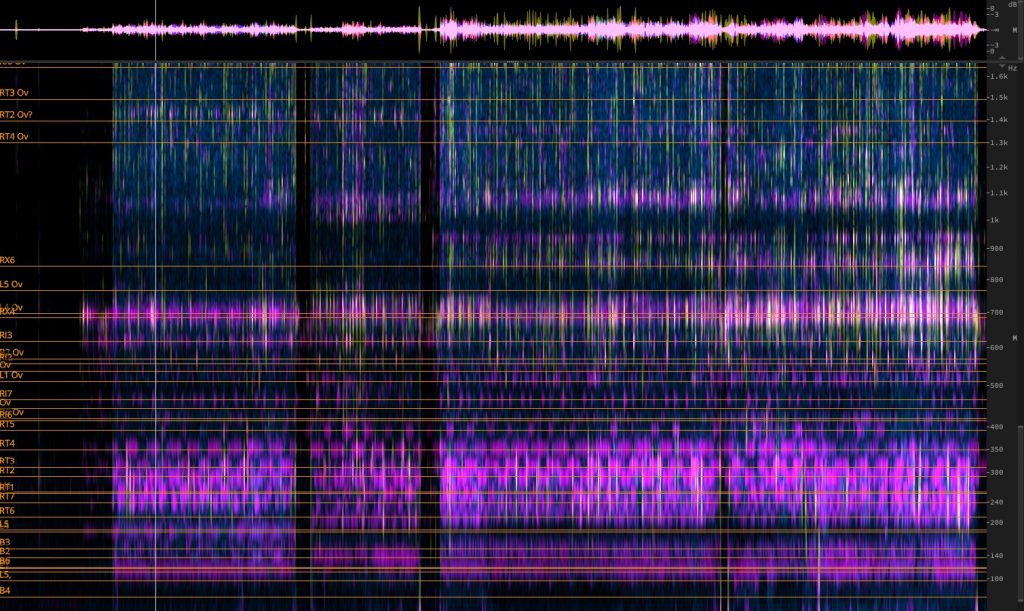
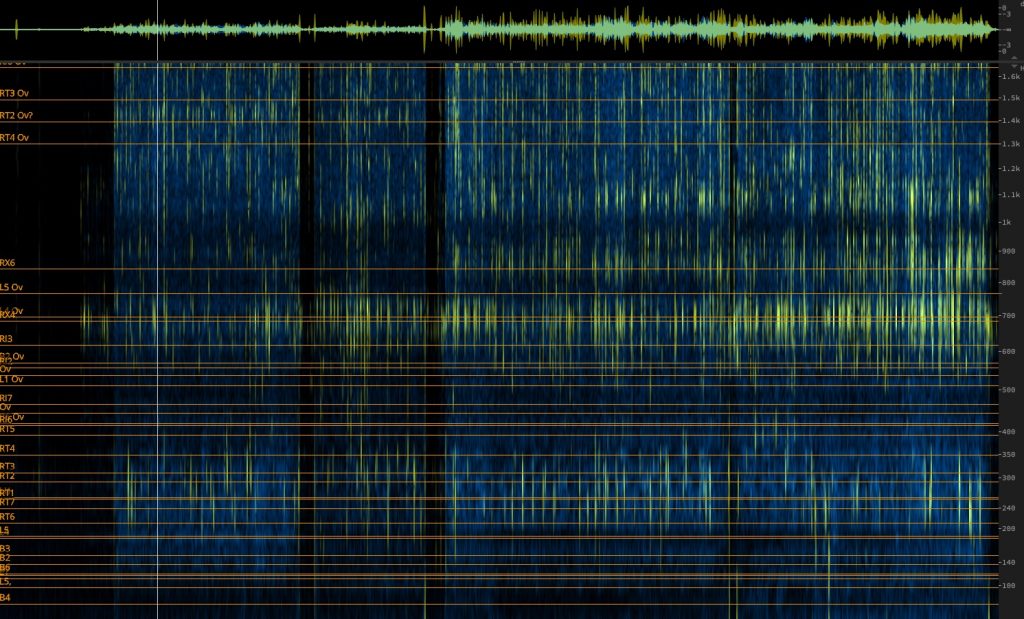
After some additional dynamic EQing and expansion, the result sounds quite promising:
The response of the buzzers in a Deze is the result of many factors. The video shows how even tiny changes in position can emphasize different keys and frequencies. The same is true when an mbira is mounted in the Deze.
While the result might not be 100% “authentic”, it’s theoretically possible to use EQing to highlight specific notes in the input signal, ideally emphasizing the rhythmic signature of the emsemble’s various Hera parts. I’m excited to experiment further.
Update (January 16, 2026)
Meanwhile I have re-recorded all parts of all songs through the deze, and added the buzzing to the songs that we are currently on. The result was definitely worth the effort! For mixing, it is simply a dream to have buzzing and instrumental parts on different tracks.
It turned out that the tonal/transient/noise splitting of SpectraLayers produces some glitchy tonal artefacts in the transient layer. So I ended up using a second method for extracting the buzzing, by subtracting the spectral components of the original mbira track from the re-recorded tracks, using SpectraLayers “Imprint” module.
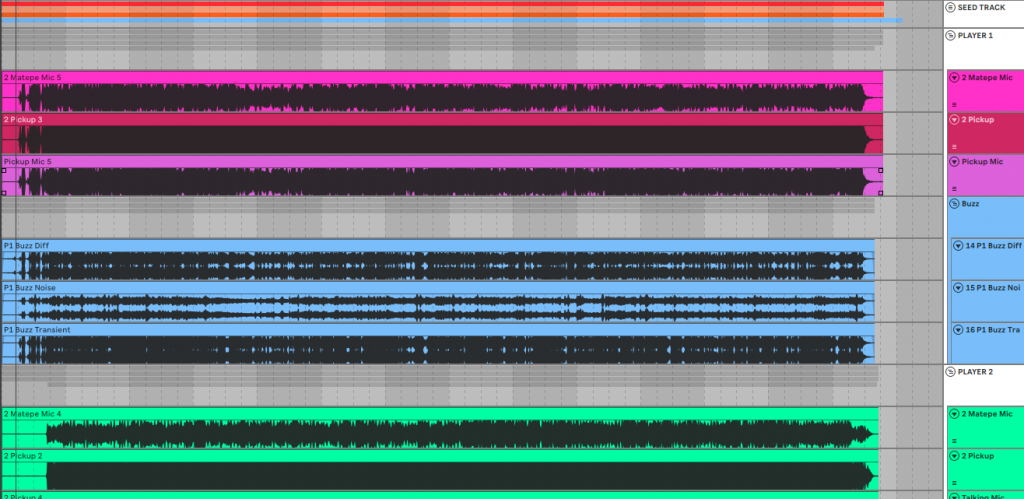
This method removes too much of the transients, however. Amaury had the idea to add the glitchy transient parts, and shorten the transients with Ableton Live’s beat mode parameters, so they sound less glitchy. So now each matepe part has six tracks in the DAW: Two mics, one pickup channel, and three buzzing parts (transient, noise, difference).
Overkill, perhaps, but in the end it all sounds great and completely pretty natural.
Leave a Reply